










ABOUT     |     CLIENTS     |    NEWS     |    JERK-OFF     |    LINKS     |    CONTACT

SYMBIOSIS? - XV Biennale de la Mediterranee | ZETEMA
Thessaloniki: 7/10 – 6/11/2011 Visual Arts, Applied Arts, Architecture, Design, Fashion, Jewellery, Urban Acts, Gastronomy Rome: 6-17/11/2011 Literature, Cinema, Music 25 years after the first successful organization of the Biennale of young creators from Europe and the Mediterranean, this international event returns to Thessaloniki. This year, the Biennale will be characterized by a new format, not just a single event, but a long journey through the Mediterranean area, with the participation of 3 main cities – Thessaloniki, Rome and Casablanca and other small-scale local events. At the end of this journey, more than 400 artists between 18-30 years old, from Europe and the Mediterranean will have participated i n the activities, presented in the framework of the common theme: “SYMBIOSIS?”. The theme has been defined by a pool of experts and curators from Thessaloniki, where the sectors Visual Arts, Applied Arts (Architecture, Design, Fashion, Jewellery), Urban Acts and Gastronomy will be hosted. The organizing institutions in Thessaloniki –the General Secretariat for Youth, the Municipality of Thessaloniki, the Macedonian Museum of Contemporary Art and the Aristotle University– are collaborating with other local institutions and independent curators, in order to activate all the creative forces of the city towards the creation of a memorable event. The XV Biennale de la Mediterranee will thus take over the whole city, as it will unfold in a variety of public and alternative spaces around the city, beyond the standard museum-type presentation. Along with the physical areas that will be occupied on land AND sea (Port area, Seacoast and Aristotelous Square, New Town Hall and the White Tower area, Valaoritou area, Aristotle University campus), local students will also work towards the taking over of the city’s media (TV, radio and web productions). Finally, the Biennale aims at providing young artists the possibility of networking with established art professionals from around the world. To this direction -in collaboration with the British Council, the Goethe Institut and the Institut Francais- significant personalities from the international arts scene will participate through a series specially designed workshops. XV Biennale de la Mediterranee: “SYMBIOSIS” in action.


VOCI DELLA PERIFERIA | ZETEMA
Voci della Periferia to the Museo delle Mura “From October 21 to November 20 at the Museo delle Mura 12 young painters, photographers, sculptors and video makers tell the Roman suburbs. The Department of Family, Education and Youth Capital of Rome in collaboration with the Department of Cultural Affairs and Historical Center - Superintendence of Cultural Heritage presents the exhibition “Voices of the periphery”, the closing event of the competition which has seen the participation of dozens of young Roman artists, aged between 18 and 35 years, which will be hosted by the Museum of the Walls from October 21 to November 20. Six artists have won a scholarship that brought them to live an experience of three months in London, New York, Tokyo and Helsinki. Twelve are those who will participate in the exhibition, curated by Costantino D’Orazio, who has worked with a committee composed of Constance Paissan, curator at the Macro, Italian Carolina, project manager of MAXXI BASE, Daniela Lancioni, senior curator of the Palace of Exhibitions, Federica Pirani, Manager of Exhibitions of the Superintendency of Cultural Capital of Rome. Banned replied to both artists who are taking the first steps to a professional level and some of the best representatives of the younger generation of painters, photographers, sculptors and video makers who work in Rome. The analysis of their work has shown that the outskirts of Rome is a context that artists today do not want to demonize or to judge with severity, but telling in all its contradictions. None of the images in the exhibition offers a stereotyped view of the urban periphery, but it aims to overcome prejudices and discover the most unusual sides of neighborhoods such as Tuscola, IL Corviale, Caffarella or the Via del Mare. In some cases, the periphery is evoked more as a concept and existential state, through operations very symbolic. If Pinzari Frances of Rome (winner of the scholarship in New York) has produced a performance in the streets of Portonaccio, Mark has produced two video animations Raparelli taking place in a fictional character from the surreal edge. The duo Silvia and Maria Teresa Zingarello Pujia (winning a scholarship to London) are the result of their action in the green space surrounding the Corviale, while Fabrizio Sartori depicts the violation of an urban space through a graphic recovered the many acts of vandalism that inhabit the peripheral buildings. James Bonifaci transforms the landscape of Tuscolano in an elegant view of Piranesi, compared with photographs of Nellie Catherine (winner of the scholarship in Tokyo), dealing with an action of social resistance in the implementation of the Caffarella Park . Gabriele Di Stefano (winner of a scholarship in London) has immortalized the sky of Tor Bella Monaca as the skyline of an American metropolis, while Enrica Gialanella a viaduct has transformed into a striking geometric composition. If the project by Mariangela Colaguori is resolved with a high technological level graphic composition, Mauro Vitturini chose to tell the periphery through the sound, while Sara Just (winner of the scholarship in Helsinki) has involved the residents in the realization of Torpignattara of a green area within the neighborhood. All are united by a look active against the urban context, which aims to transform the image and, above all, to affect the public imagination. The artists winners of the scholarships will have the opportunity to present the result of their experiences abroad, which will be documented in the catalog accompanying the exhibition. The volume also collects pictures of all the artists who participated in the competition notice, even if they have passed the selection. Museo delle Mura, housed in the ancient port of San Sebastian, still the threshold between the urban and less built the Appian Way, is presented as the most suitable place for the presentation of a complex reflection on the concept of edge . During the exhibition, the Museum will remain open in the evening every Friday and Saturday, from 19 to 23 to November 20.


LUNATICHE - MOON DRAWN BY ILEANA FLORESCU | CARLO CAMBI EDITORE
Ileana Florescu was born in Asmara (Eritrea) of an Italian mother and an English father of Romanian origin. After having spent her childhood in Morocco, France, England and Switzerland, she settled in Italy and earned a master degree in Humanities. Despite a natural talent for painting and drawing, she entered the academic world taking part in Prof. Sergio Bertelli’s History Workshop, and specializing her studies on the Commedia dell’Arte and the rituals of Italian Renaissance courts. Her essays have been published by Bompiani, Mondadori, Ponte alle Grazie and Bulzoni. In 2001 her work “Meteorite I” was exhibited for the first time by the Pio Monti Contemporary Art Gallery in the group show “Tra Cielo e Terra”. Her decisive encounter was in 2002 with Diego Mormorio, who proposed Florescu for her first solo exhibition “Scie” at the Roman gallery “Acta International”. In the same year, she decided to relocate her studio in the former pasta factory “Cerere”, historic seat of the “School of San Lorenzo”.


 ALEC SOTH

ALEC SOTH "LA BELLE DAME SANS MERCI" | PUNCTUM PRESS
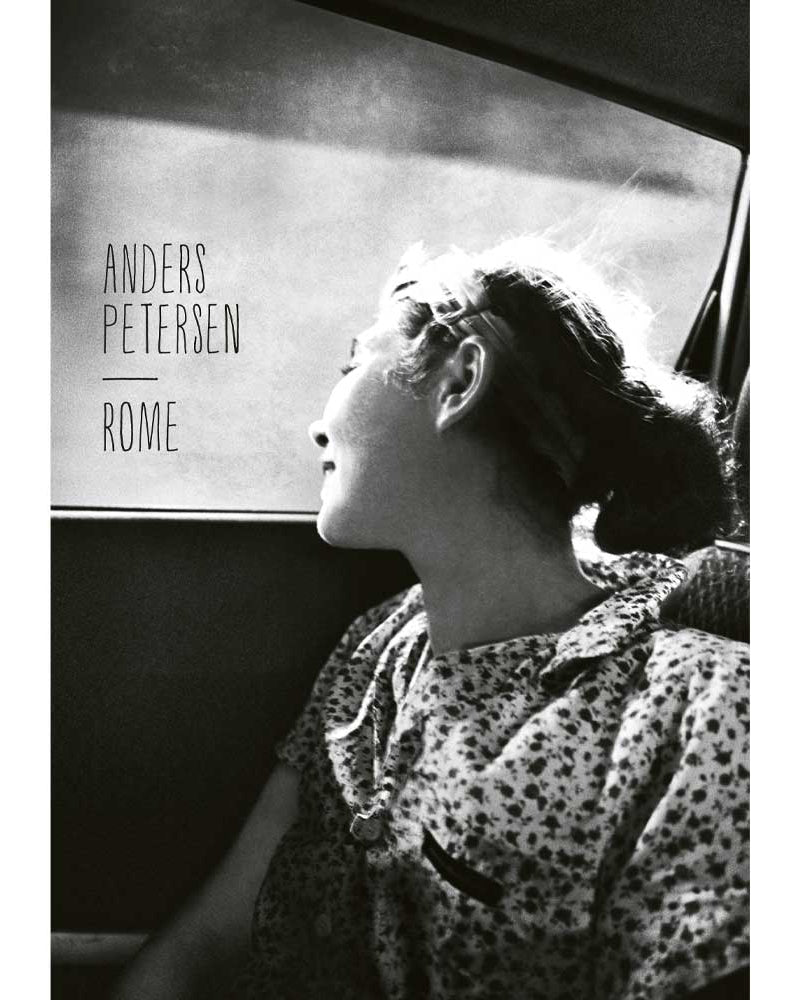
Founded in 2003, the Rome Commission asks every year to selected international photographers to portray the city of Rome in total freedom of interpretation. In the past Josef Koudelka (2003), Olivo Barbieri (2004), Anders Petersen (2005), Martin Parr (2006), Graciela Iturbide (2007), Gabriele Basilico (2008), Guy Tillim (2009) and Tod Papageorge (2010).
Every project is curated by Marco Delogu, who has recently assigned the 2011 edition of the Rome Commission to Alec Soth, one of the great protagonists of the contemporary photographic research. Each work produced in the past Rome Commissions have marked an important moment for the respective photographers: Olivo Barbieri decided for the first time to look at cities from above; “Roma, città di mezzo” was the first Guy Tillim’s project accomplished outside Africa; Martin Parr focused in Rome his research on the global tourism.
Alec Soth’s work is rooted in the peculiarly American tradition of photography on-the-road practiced by Walker Evans, Robert Frank and Stephen Shore. He received scholarships from McKnight, Bush and Jerome foundations, and in 2003 he won the Santa Fe Prize for Photography. Alec Soth’s photographs are part of major public and private collections, including San Francisco Museum of Modern Art, Museum of Fine Arts in Houston and Walker Art Center. His work has been exhibited in various solo and group exhibitions, including the 2004 Whitney Biennial and a retrospective at the Jeu de Paume in 2008.
The choice of Alec Soth is part of a broader research on American photography started by FOTOGRAFIA, in tune with the recent exhibitions of Stephen Shore at the Museo di Roma in Trastevere, Joel Sternfeld in the spaces of MACRO Testaccio, the residences of Tim Davis, Montheith Matthew and Nancy Davenport and the second edition of the project ‘A Question of Time’ at the American Academy in Rome, the 2010 Rome Commission of Tod Papageorge and the exhibition of Gregory Crewdson at Gagosian Gallery with photographs taken at Cinecittà.
Rome is the only city in the world to have assigned for nine consecutive years her “portrait” to such elite of international photographers. In addition to the past Rome Commission’s photographers, the project has also involved many other authors as David Farrell, Leonie Purchas, Tim Davis, Matthew Montheith, David Spero, Pieter Hugo, Juan Fabuel, Agnes Geoffray and Miguel Rio Branco. This project will soon feed into a major exhibition: the “portrait” of our city in the new millennium.


FOTOGRAFIA 2011 - MOTHERLAND | QUODLIBET
The theme of the tenth edition of the FOTOGRAFIA – International Festival of Rome aims to tackle the unique relationship established between photography and the land, in the deepest and most intimate sense of the word, based on a genuine analysis of the close relationship between the photographers and their belonging to a place, and in many cases their actual identification. It is the result of an increasingly pressing need to seek one’s “motherland”: everyone responds in their own way, examining lands that belong to them, whether they are old or new, large or small, real or virtual, with a completely personal documentation, which is the fruit of their life and the need to return or move away.
Motherland is a theme that is investigated and propagated by photography, and today we seek it in relation to the creation of constantly new identities in a world that has been completely explored and technologised, but in which the need to investigate new “lands” and to seek one’s own, is a prominent recurrent theme.


TWIKLES - MISS VAN | DRAGO PUBLISHING
This is the first book by Miss Van, which covers her works from Stole Heart (2008) to Twinkles (2010). “By painting a world of tears and masks - as Magda Danysz wrote in the book’s introduction - Miss Van has always centered her painting on the feminine, autobiographical, figure. Miss Van’s art carries a lot of symbols in form of flowers and animals. In her Twinkles series Miss Van has used a lot of flowers, from green soothing large plants to intense red, almost sexual, exotic flowers. Miss Van’s visual form, recognizable in the fact that it is insisting on color, vitality and beauty, shows that life is always worth living - no matter how painful it can be. The bright colors of this multicolored world reflect the joy of it all”. Miss Van has gone from painting the curvy, enticing pin-ups in the street of Toulouse, to painting the melancholic and subtle works of this new exhibition. Her various travels and encounters have enriched her already complex world. Thanks to her past year exhibitions in Barcelona, Los Angeles, san Diego, Mexico, London or Paris, she has found many new sources of inspiration. Not only has she been influenced by the contemporary artists with whom she has shared many privileged moments, she has also orrowed the techniques and subtle lighting effects of great artists of the past, focusing her work more on the quality of her painting and less on self-asserting  herself as is the common in street art. With this new series she has undergone a beautiful evolution towards a more mature and refined style of painting, but without ever losing touch with her street art origins. Miss Van once again exhibits a melancholic collection of painings. As always women are the centre of attention. By adding a generous dose of coquetry and mischief to the ingredients of her work, she manages to bring out all the glamour, sensuality and sparkle of the female character she has created.


FROM STYLE WRITING TO ART - STREET ART IN CHINA ED. | DRAGO PUBLISHING
“From Style Writing to Art” is the first Street Art anthology ever published. This book’s goal is to explore the reasons why style writing as some call it, graffiti, or street art is turning out to be the major art movement at this turn of the century. From graffiti pioneers in the 60s, to how street art branched into the art world during the 80s, to whatever new issues and practices have emerged since the 90s, to which artists make a difference, the book covers it all.
Each period is complete with 2-3 page biographies for each considered artist, covering their beginnings, their artistic career, along with a personal style review, as well as an artwork analysis section. Overall, the book offers 50 complete biographies of top street artists from Seen to JR, via such as Miss Van, JonOne, Shepard Fairey, Quik, Blade, Doze Green, and Keith Haring whose work and career is thoroughly explored.
There is major talent in the history of graffiti. And this talent is, in the end, the only answer to the infamous “But… is it really art?” question. Out of this both compact and diffuse form of expression, real art practices have emerged, absolutely unquestionable in terms of quality and longevity. This book is about why this is Art. What else? dragolab.com is the ONLY place where you can buy this book until November 2009. Get it here, get it first. Visit the shop to order your copy of From Style Writing to Art: a Street Art anthology.


PHONEBOOK - CB SMITH | DRAGO PUBLISHING


JR - WRINKLES OF THE CITY | DRAGO PUBLISHING
JR owns the biggest art gallery in the world. He exhibits freely in the streets of the world, catching the attention of people who are not the museum visitors. His work mixes Art and Act, talks about commitment, freedom, identity and limit. After he found a camera in the Paris subway, he did a tour of European Street Art, tracking the people who communicate messages via the walls. Then, he started to work on the vertical limits, watching the people and the passage of life from the forbidden undergrounds and roofs of the capital. In 2006, he achieved Portrait of a generation, portraits of the suburban "thugs" that he posted, in huge formats, in the bourgeois districts of Paris. This illegal project became "official" when the Paris City Hall wrapped its building with JR's photos. In 2007, with Marco, he did Face 2 Face, the biggest illegal photo exhibition ever. JR posted huge portraits of Israelis and Palestinians face to face in eight Palestinian and Israeli cities, and on the both sides of the Security fence / Separation wall. The experts said it would be impossible. Still, he did it. In 2008, he embarked for a long international trip for "Women", a project in which he underlines the dignity of women who are often the targets of conflicts. Of course, it didn't change the world, but sometimes a single laugher in an unexpected place makes you dream that it could. JR creates "Pervasive Art" that spreads uninvited on the buildings of the slums around Paris, on the walls in the Middle-East, on the broken bridges in Africa or the favelas in Brazil. People who often live with the bare minimum discover something absolutely unnecessary. And they don't just see it, they make it. Some elderly women become models for a day; some kids turn artists for a week. In that Art scene, there is no stage to separate the actors from the spectators. After these local exhibitions, the images are transported to London, New York, Berlin or Amsterdam where people interpret them in the light of their own personal experience. As he remains anonymous and doesn't explain his huge full frame portraits of people making faces, JR leaves the space empty for an encounter between the subject/protagonist and the passer-by/interpreter. This is what JR is working on. Raising questions... JR currently works on 2 new projects: Wrinkles of the City which questions the memory of a city and its inhabitants and Unframed, which reinterprets in huge formats photos from important photographers taken from the archives of museums.


KIKI SMITH @ GALLERIA LORCAN O'NEILL - ROMA | SIMON D'EXEA aka PERFECT SHOT
Kiki Smith has open her second solo show with the Galleria Lorcan O'Neill Roma. The exhibition include new works on paper and sculptures.
Kiki Smith (born January 18, 1954, in Nuremberg, Germany) is an American artist classified as a feminist artist, a movement with beginnings in the twentieth century. Her Body Art is imbued with political significance, undermining the traditional erotic representations of women by male artists, and often exposes the inner biological systems of females as a metaphor for hidden social issues. Her work also often includes the theme of birth and regeneration, sustenance, and frequently has Catholic allusions. Smith has also been active in debate over controversies such as AIDS, gender, race, and battered women.


JB ROCK & DIAMOND - ROMA OMNIA VINCIT | DRAGO
ROMA OMNIA VINCIT is the first book from Roman street artists JB Rock and Diamond.  It has been done in a flip over style with two covers, on one side Diamond, on the other JB Rock. They are friends and collaborators and they work both together and alone. Each artist has his own technique, style, and perspective, however their work on the street often parallels the other. Their work is a true reflection of their street art attitude, which can be seen in their style and dedication to their work and designs. Follow the True Roman Urban Style! The process of creation can be followed from conception in the studio to the adhesion to the walls, which passes through the realization of the poster and stencil techniques. This leads to the meanderings of Street Art, not only a mere practice but also in its execution. The two artists and their two different approaches lead to questioning the values and the differences between exposition in a gallery and position on the street. The book, in its flip over style can be read from either direction, front to back it focuses on the work of one artists and from back to front on the work of the other. In the middle the works are fused together in critical texts that explain and contextualize this movement in an amplified vision that comprehends the landscape of contemporary art. An original book conception, with two covers – essentially two books in one! Their art nouveau inspiration, mixed with decorative icons and rugged style, often comprised of exquisitely tattooed ladies who have been transported to a 1920s beauty pageant or transformed into Ancient Roman icons that recall the history of the Eternal City. This book contains something extremely new for street art lovers to understand and experience. ROMA OMNIA VINCIT follows two Roman street artists from the studio to the street and provides a taste of a new style of street. Photos, drawings, and critical texts provide a visual context by which to understand the urban culture made in Rome… JbRock & Diamond are two Roman street artists. Their vision is unique and peculiar, full of Classical Greek and Roman inspiration combined with pop icons, early century liberty style, and a hint contemporary culture thrown into the mix. Tattooed ladies meet centurions meet Christ and wolves. All of these themes appear both in the street and in the gallery. For the first time, however this unique style is illustrated in a book. Street Style is an attitude. This book represents a report on their artistic development and search for a unique voice, both together and individually.
Diamond was born in Rome in 1977.  He was very interested with the development of street writing in the 1990s and did his masters in fine arts the the Accademia di Belli Arti di Rome with a focus on “street art.” From that point he became one of the most well known artists in the Roman Street Art movement. The work of Diamond is consistent with his own vision; it does not trace the classic clichés of street art. The various techniques and unusual themes often have symbolic and esoteric implications that result in eclectic and unsettling images.
JB Rock was born in Rome in 1979. He works on canvas and with wheat-paste, posters, stickers, stencils or whatever medium he desires. The city is his playground. His style, inspired by Art Nouveau and Classical icons, has constant references to the Ancient Roman World, seen also in his use of Latin words. He started working in the early nineties as a writer. He concentrated on lettering and tags before arriving to use of the human figure. Fantasy and reality mix together to produce ephemeral female forms that have been inspired by both classical drawing and pop culture influences.


LEX & -STEN - STENCIL POSTER | DRAGO
Sten and Lex are the pioneers of the "stencil graffiti" in Italy. Start work in Rome in 2001. The first stencil-moovies b depict icons like Bruce Lee, Lieutenant Colombo, Dirty Harry. Shortly thereafter, the search leads them to depict the anonymous faces of students taken from college yearbooks of the 60 and 70. A path that tends to shake the golden-shouldered Pop origins of anonymous faces and recover without the repetition that characterizes the technique of the stencil. The same stencil was never repeated several times, in fact, the matrix has the potential for endless repetition and the paradox lies in not repeating the same array multiple times. One story is that of paralleo prints and engravings, Sten and Lex reproduce details notes and illustrations of stamps of the past, as the illustrations of Gustave Dore, and make them monumental painting on large posters, three, four meters high. The technique stencil belong in the family of printmaking techniques, so the study of the arts of printing in the past has been and is still very important in their work. Often between their images trace elements of religious and church, the tone is irreverent but always part of that recovery of classical art that is reproduced through a formality subjective of the two artists. Their importance in the international arena is due to the fact that they were the first in the world to introduce the technique of using stencils of the half-tint, their stencils are made up of points, pixels, lines and images that make sense. Points and lines have different readings depending on the distance from which you look at the Imagine, at close range the image is abstract away the image is configured in its entirety and is becoming more realistic. The technique in question was adopted by them HOLE SCHOOL. The images suggest that today about personal portraits from photos taken by themselves, the use of half-tone makes it seem like their work prints and engravings of the past. Their merits concerning the technique of stencil has been recognized by Banksy, the most important international street artist who takes them inivitati at the Can's Film Festival in London. On that occasion the Holy Sten and Lex was painted next to the Buddha of Banksy. Their posters and stencil wall paintings are found in every part of Rome and in Renting European cities.


URBAN CONTEST | DRAGO PUBLISHING
Urban Contest - Rome 2010 is the catalogue for the event of the same name that will take place in the ancient arena known as the Circus Maximus, the Roman chariot racing stadium and mass entertainment venue located in the center of the city, from September 10th to the 12th. The catalogue is composed of explainatory texts and some of the best images from the artists involved in the project. It is a gallery of photos that illustrates the history of the graffiti-writing phenomenon in the Eternal City.  108, Luca Barcellona, Emiliano Cataldo, Dem, Agostino Iacurci, JBRock, Joys, Lucamaleonte, Matteo Milaneschi, Sparky, Thoms, Useless Idea and Verbo are the artists involved. The Mayor of Rome, Gianni Alemanno, the Head of the Cultural Ministry, and other influential members of Rome’s political environment have skillfully written the introductory texts, which address the evolving relationship between Rome and the arts. From the birth of the graffiti movement on streets and subway cars to the arrival of these artists in galleries, Urban Contest is an interesting overview of an artistic movement that is attracting interest from various sectors of culture, including fine and contemporary art, the fashion industry, social and political circles, and popular trends and the marketplace. Fashioned after the fanzines of the 80s, the catalogue is made up of more than sixty full-color pages dedicated to the creative hands and minds that contributed to forming a collective movement in Rome and this rare photo archive: now you just need to browse through the catalogue to see what it is all about.


FOTOGRAFIA 2010 - FESTIVAL INTERNAZIONALE DI ROMA | ZETEMA
This year’s International Photography Festival ("FotoGrafia") in Rome features important innovations: a new venue (the Testaccio branch of MACRO, Rome’s Museum of Contemporary Art), a new time of the year (September 23 to October 24), and a team of three curators working with Marco Delogu, the Festival’s artistic director: Marc Prust (for the photography and publishing section), Valentina Tanni (photography and new media) and Paul Wombell (photography and contemporary art). The event is sponsored by the City of Rome’s Department of Cultural Policies and Communication – Cultural Heritage Superintendency with the support of Fondazione Roma and, starting this year, is produced by Zètema Progetto Cultura. The theme of the ninth FotoGrafia Festival is Futurspectives, in other words, “Can photography interpret the future?” This paradox is immediately evident in the work that Paul Wombell has done for “Bumpy Ride,” the show he’s curated for the Festival’s Photography and Contemporary Art section. We usually speak of photography in the past tense. Once a picture has been taken, it transports us backward in time, and in a way it becomes history. But some photographers are questioning this premise, creating images that look forward, not backward. These photographers work more like science-fiction writers, using the photographic process to imagine how the future might appear. “Bumpy Ride” brings together the works of contemporary photographers like Peter Bialobrzeski, Sonja Brass, Cedric Delsaux, Jill Greenberg, Ikka Halso, Mirko Martin and O Zhang, who use both digital and analog technology and are challenging our expectations about what we see in an image. Another attempt to answer and interpret the same question is provided by Valentina Tanni’s research for the Photography and New Media section Photography and the new media meet in an eternal present; they’ve already met but are continuing to do so. That’s why the section of the Festival dedicated to this theme is making its debut with a show called “Maps and Legends,” a project whose goal is to map a territory that’s constantly evolving. A cartography in progress on the relations that photographic practice is establishing with the world of the Web: its culture, its language and its imagery. Alongside the maps are the legends – the set of signs – that the viewer needs to decipher them. And, most important, legends in the sense of myths and tales: everything that makes the Web a real place, endowed with history and culture. From animated gifs to photos shot in virtual worlds; from the images of Google Street Views to snapshots that change in real time, with the data flows, and on to the camera that captures time instead of space. Ten photographers – Marco Cadioli (Italy), Martijn Hendriks (Holland), Justin Kemp (U.S.A.), Jaime Martinez (Mexico), Filippo Minelli (Italy), Sascha Pohflepp (Germany), Jon Rafman (Canada), Phillip Toledano (U.S.A.), Harm Van den Dorpel (Holland) and Carlo Zanni (Italy) – for a show that tries to see into the future (or perhaps we should say into the continuous present) of photography. Last but not least, the section on Photography and Publishing, curated by Marc Prust. As its title “Unpublished – Unknown” suggests, this show presents a selection of unpublished works. The question that underlies the curator’s investigation was: can one say that a photo exists if no one but the photographer has ever seen it? Can one speak of a second “decisive moment” after Henri Cartier Bresson’s, the moment when the photo is published? Rather than a show of unpublished works, this is a show of uncompleted works, because they still have to cross the hurdle of this second decisive moment: publication. Rescheduled to open in September, the Festival becomes the first event in the international season. It will also host the debut of the European Photography Month’s new production, “Mutations 3 – Public Image, Private Views,” curated by Emiliano Paoletti. Among other things, this production will present Rob Hornstra and Arnold Van Bruggen’s Sochi Project, a slowjournalism undertaking financed via the Web to document changes in the Russian region slated to host the Winter Olympics in 2014. The Rome Commission, now in its eighth year, has been entrusted to Tod Papageorge, the great American photographer and originator of the Yale School, whose members include Gregory Crewdson and Philip Lorca di Corcia. Starting this year, the Festival will benefit from the collaboration of MACRO, which confirms its mission as a multi-site image museum serving the Italian and international public. This squares with the choice to host the Festival at MACRO’s two pavilions at Testaccio, the branch devoted to large-scale events. Besides the many changes, some important aspects of the Festival have been confirmed for this year too. A group of galleries will promote local artists and operators. The most important international academies and cultural institutes operating in Rome, including the American Academy, the French Academy at Villa Medici and the Royal Spanish Academy, will present projects created specifically for the Festival. IILA FotoGrafia Prize for young South American photography will be awarded again this year, and “The Empire of the Sun,” a work on Rome by José Manuel Castrellón, who won the prize last year, will be presented. In addition, the Festival will host Giuliano Matteucci’s show “Ecclesia,” winner of the Baume & Mercier Prize


LO CRUDO COCIDO | PUNCTUM PRESS
On show are the work of the winner and finalists of the third edition of the award-IILA Photography for young photographers in Latin America: Pablo López Luz (Mexico), winner of the event; Cynthia Nudel (Argentina), second place; Nicolás Wormull (Chile) third place; Spivacow Diego (Argentina), Honorable Mention; Julieta Anaut (Argentina), Andrea Padilla (Argentina), Eva Pedroza (Argentina); Zorzal Bruno (Brazil); Romulo Peña (Venezuela).
More than 60 Latin American photographers who attended the prize, explored the theme "Nature in relation to the metropolis" with works of quality, intelligent and original, telling the natural (or what's left of it) within cities, but also the nature of urban and homo metropolitanus that inhabit them. The photographs look at the dialogue between humanity and the planet, nature and culture in view of the alternating dominance of both the resistance of the other. The jury, chaired by Patricia Rivadeneira (Cultural Secretary IILA) by Marco Delogu (Artistic Director of Photography), and composed by Paul Wombell (curator of "Photography and Contemporary Art of Photography, has already collaborated with PhotoEspaña, Madrid), Simonetta Lux (Director of the MLAC - Museo Laboratorio Arte Contemporanea, La Sapienza University of Rome) and Paul Angelosanto (visual artist), has decreed that the best work of Pablo López Luz project, which addresses the concept of landscape and its changes, in light of the report between man (ever-present) and its surroundings, with great attention to the topography of the city (Mexico City) becomes almost a romantic remembrance of last century.


A QUESTION OF TIME | PUNCTUM PRESS
In 2009 the work was concentrated within the Aurelian walls; this year it is focuses on the Roman Campagna, outside the walls, a classic theme of great visions and the natural continuation of last year’s work. The field work commenced following the study of the pictures in American Academy’s photographic library, freely pursuing visual stimuli. Leonie Purchas and Juan Fabel travel along the Via Ostiense, with Purchas customarily seeking its humanity, meeting people (she ends up dining with a group of fishermen from the Idroscalo) and recounting parts of contemporary life based on age-old scenes and the repetition of old gestures. Fabuel reaches the sea, drying his vision and leaving only small paths in the pine grove, clearings and modern concrete archaeologies. Purchas had previously worked with the sun high in the sky in the area of the park with the aqueducts, often filling her photographs with people. Inspired by the photographs of the archive, she returned to the same places, but those pictures were uniquely hers, despite their very thoroughly Roman nature. Agnes Geoffray follows the old Appian Way, working on a mise en scène exploring the ambivalence on the female presence during the day (tourists) and night (prostitutes) with a series of photographs full of melancholy, heightened by their scale that amplifies the sense of human isolation in comparison to the monumentality of the ruins. Giuliano Matteucci’s photographs capture someone exploring the Mausoleum of the Villa Gordiani, immersed in a silent dimension, where the monumentality is enshrouded by unkemptness, appearing to protect it from the present and save it from a picture-postcard destiny.  Among the deep shadows of neglect, somebody still has the chance of a solitary experience of discovery and a private relationship with the signs of antiquity. od Papageorge was struck by an archive photograph of Porta Furba and decided to continue his Roman wanderings in that area, where he finds pieces of wall alongside large reproductions of the Colosseum and a succession of ancient and modern archaeologies that logically intensify the “question of time”. I leave the city through the Porta San Sebastiano and head south on a clear day on which the “Castelli” are perfectly defined. Other places that I know well: the Cartiera Latina and the Almone river, which I managed to see before it was rerouted underground in the 1960s; the Quo Vadis church, which made me laugh when I learned its translation as a child, unlike the terror that the catacombs in front of it always aroused in me; and the beautiful Appian Way that proceeds from it. Everything is incredible, even for someone who has seen it many times. I don’t know why, but my favourite place is still the Villa of the Quintilii and its less monumental entrance from the old Appian Way. During the days that I spent at the photographic archive of the American Academy in Rome I was dazzled by the “perfection” of Anderson’s photograph. When I arrived at the villa, a combination of the beauty of the place, the light, the wind and the memory of Anderson’s photo triggered a strange hint of Stendhal’s syndrome in me: it’s too beautiful, perhaps I’ll leave. I can’t find a key, I don’t understand, but I manage to recover my calm, perhaps because I lie on the ground. Yes, lying on the ground and observing the site through the nature that had survived the summer is pleasant and causes me a strange joy. As is often the case in Rome, one chances upon entirely surreal moments: I walk seeking a vision, I lie on the ground and a low-flying helicopter appears, keeping watch over a background noise (whistles, car horns, wailing sirens and squealing tyres) – it’s Colonel Gaddafi’s  retinue, on its way home via Ciampino airport. The sound soon dies down and the age-old silence returns to the Villa, accompanied by the wind. I think of Anderson’s photograph again, so beautiful and so close today. In 1999 I had taken four photographs at the Villa of the Quintilii. I had subsequently thrown two away, but I remember that I liked the other two. I clearly remember a wall that completely filled the first photo, but my memory of the second was rather vague. When I got back to my studio I had another look at the photographs that I had just taken, but I forgot to search for those taken in 1999. Two days later I decided to work on just two new photographs, I corrected the colours and then looked for the two old photographs. The one that I hadn’t been able to remember was surprising and appears a sort of remote foreshadow of my “Nature Bianche” work that underlies the new photograph taken at the Villa of the Quintilii. Here is a new short circuit: Anderson’s photo, nature (with the wind, which played a vital role in the “Nature Bianche” series), walking at the Villa of the Quintilii and taking the new photograph and then returning to my studio and finding an old photograph taken in the same place eleven years earlier, which is a direct precursor of this latest work.  All of this is a little concentrate of the spirit of the work at the American Academy in Rome. This book sums up the works of the 2009 and 2010 workshops. Commencing with the concept that a photograph is a photograph, a book is a book and an exhibition is an exhibition, this book contains just part of the pictures taken by the individual photographers who participated in the workshops, and part of the archive photographs displayed in the exhibitions of the 2009 and 2010 editions. 


FRANCESCO FOSSA - QUOTA MILLE | PUNCTUM PRESS
Francesco Fossa was born in 1966 in Piedimonte Matese. He now lives in Rome, where he works as a journalist for broadcaster Mediaset. He has contributed to several Italian magazines, including L'Espresso, D la Repubblica, Diario.


TOD PAPAGEORGE - OPERA CITTA' | PUNCTUM PRESS
Tod Papageorge (born 1940) is an American art photographer whose career began in the New York City street photography movement of the 1960s. Papageorge started taking photographs in 1962 as an English literature major at the University of New Hampshire. He is the recipient of two Guggenheim fellowships and two NEA Visual Artists Fellowships. His work is in public collections including the Museum of Modern Art and the Art Institute of Chicago. Since 1979, Papageorge has directed the graduate photography department at the Yale University School of Art, where his students have included Philip-Lorca diCorcia, Lois Conner, Abelardo Morell, Andrew Bush, Susan Lipper, Gregory Crewdson, An-My Le, Anna Gaskell, and Katy Grannan. In the summer of 2007, Steidl published Passing Through Eden, a collection of images he took over 25 years in Central Park. In the fall of 2007, Aperture published American Sports, 1970: Or How We Spent the War in Vietnam. This volume features photographs Papageorge took during his 1970 Guggenheim Fellowship.


GIULIANO MATTEUCCI - ECCLESIA | PUNCTUM PRESS
Giuliano Matteucci only wants to take photographs. He researches, studies, explores to find photographs and takes time, thinks, has rapacious visions, does not follow stories thinking of possible settings, but builds his own vision of the world. I know his work, his unrequited nature and his rigour. Giuliano Matteucci is a little like his photographs; although I don’t travel, it’s easy for me to imagine him walking through Africa: vicariously, the little known dimension of journeying becomes clear to me. And I imagine this work like an endless “ramble” following in the wake of travellers, photographers and evangelicals; a route with stops where rural churches are a concentrate of visions but also perhaps a search for a different and decentred image of the “Church”. As with many projects, this too is indebted to other disciplines and to the more noble aspects of photography; I am thinking of the tradition of landscape photography, journeys like that of André Citroen, and of some of Guy Tillim’s works.
Matteucci always chooses a frontal frame, with very few concessions to slightly more lateral visions, but these few digressions preserve him from a contemporary “beckerian” rigidity which would have little to do with his work. Walking down streets trodden for centuries, Giuliano Matteucci looks for sensations without sensationalism, and standing in front of his subject, whether an arid landscape or a group of people, he puts parts of himself into an enormous continent. And the light connects his entire work, drives the displacements, reacts to the nuances of the earth, and is still very strong in interiors, close to a “vision”, which in this case also has a spiritual significance. Matteucci resolves everything by choosing a “blinding clarity” by using his panoramic view in order to connect to the extension of territory. His journey, in reality, unfolds in infinite territorial dimensions between large seclusions and spaces of contact, the “ecclesia”, that exalt other contacts: those of the various religious communities and those that Matteucci creates with them. Even in his portraits, the use of the panoramic format comes close without invading, and brings us a personal vision of the world.
This book is the result of years of “unique” photographs, of subtractions and erasures. This is the way it should be, it is his rigorous method: “cleaning” the depths.    


POP SURREALISM - WHAT A WONDERFOOL WORLD | DOROTHY CIRCUS | DRAGO PUBLISHING
The exhibition "Pop Surrealism - What a Wonderfool World", curated by Alexandra Mazzanti and Gianluca Marziani, is the first event exclusively devoted to American and international Pop Surrealism. At the Carandente Museum of Spoleto, from June 26 to October 15, you could see, for the first time in Italy, the masterpieces of historical artists of this revolutionary power, born in California in the late 70s. Through the more than eighty works on display, we forward in the surreal flows of a narrative and figurative paiting. The artists exhibited are forty and they are the major international exponents of Pop Surrealism, like its founder Mark Ryden, along with Joe Sorren, Todd Schorr, Shepard Fairey, Marion Peck, Camille Rose Garcia, Alex Gross, Ron English, Gary Baseman, Tim Biskup, Sas Christian, Kris Lewis, Ray Caesar, Jeff Soto, Travis Louie, David Stoupakis, James Jean, Adam Wallacavage, Tara McPherson, Missvan, Lola, Esao Andrews, Scott Musgrove, Jonathan Viner, Naoto Hattori Natalie Kukula Abramovich, Kathie Olivas, Natalie Shau, Mijn Schatje, Ana Bagayan, Michael Page, Tim McCormick, Nathan Spoor, Paul Chatem, Ken Keirns, Aren Hertel, Leila Ataya, Aaron Jasinski, and the only Italian leaders Nicoletta Ceccoli and Niba. In perfect harmony with the Surrealist roots of the thirties, the prophecies of figurative pop regenerate in a constant movement between the registration of real and immediate reworking dream. Landscapes, bodies, animals, history, nature, objects: this is the world reinterpreted by Pop Surrealism. A no-space where everything looks like the real thing, but where we perceive suspended atmospheres, a sense of agonizing waiting and silent, doubt and danger, where abnormal silences or strange noises are coming. A world similar to ours, where certain domestic and individual landscapes’ meaning are inverted and expressed by classical painting technique. The favourite subjects are pop icons, broadcasted by leisure media that live in our collective imagination from the world of fairy tales on. The topics vary from the vitality of childhood and adolescence to moral aspirations and chronicles of everyday life. At the same time it exceeds the unexpected and involves the incredible metropolitan, recreating a possible contemporary surrealism, son of a transverse, versatile and electronic era. Book published by DRAGO.
“Pop Surrealism - What a Wonderfool World” From 26th June to 15th October 2010 Museum Carandente - Palazzo Collicola - Spoleto - Italy


41ST PARALLEL: FROM THE ETERNAL CITY TO THE CITY THAT NEVER SLEEPS
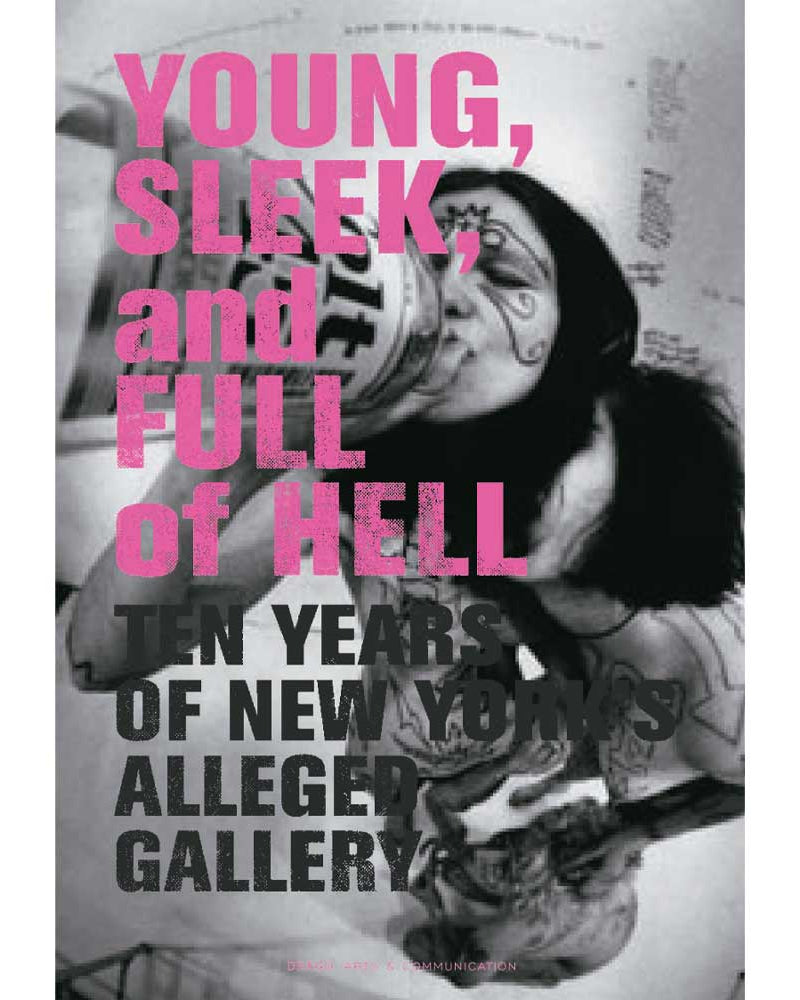
On Wednesday April 28th from 7-10pm, Wooster Collective and Drago will present a hot and heavy round table discussion and Q&A session to explore the current happenings in today’s art movement with nine of the top names from the streets of New York: Chris Stain, Elbow-Toe, Ivory Serra, Logan Hicks, Pax Paloscia, Swoon, WK Interact, as well as Drago Publisher Paulo von Vacano and Wooster Collective’s Marc and Sara Schiller at their super chic venue Meet at the Apartment in SoHo. Ivory Serra (The Serra Effect), Logan Hicks (Arrivals and Departures), Pax Paloscia (Let the Kids Play), and WK Interact (2.5 New York Street Life) all published books for Drago’s 36 Chamber Series box collection. Chris Stain, Elbow-Toe, Swoon, and WK Interact contributed their work to The Thousands: Painting Outside, Breaking In, a book and exhibition curated by RJ Rushmore and published by Drago. All books from the artists present and a selection of other Drago publications like Ed Templeton’s Golden Age of Neglect, Nick Walker’s, A Sequence of Events, Aaron Rose’s Young Sleek and Full of Hell, and Estevan Oriol’s LA Woman will be on sale and available at special 25% discount exclusively for this awesome evening. The contemporary art publishing house known as Drago acts as a rhizome into the international mindset that is fueled by the ideas and values of the current generation. As a cultural symposium, Drago creates and presents forums for exchange through various pathways by remixing pop culture and undiscovered trends; those pathways include, not only the publication of art books, but hosting events, sponsoring art projects and collaborations, curating exhibitions, executing press and communication strategies, trend scouting, and promotion via the Drago blog (www.dragolab.com). It is from these creative platforms that Drago contributes to the growth and expansion of the alternative re-evolution that began on the street and over the Internet. Drago represents the mainstream of minorities, where under is over and over is under. From their home base in Rome, Italy, Drago found a parallel group in New York who maintain the same groin-yearning ardor for art, culture, and the urban experience. Due to the two groups’ equally energetic and eternal lust for participation in and promotion of the arts, Drago sought to collaborate with Wooster Collective and bring some of the great names off the street and in for some page turning, but more for the drinking and debating. Marc and Sara Schiller founded the Wooster Collective in 2001. Their mission is to discover and document authentic art experiences via salons, publishing, gallery shows, and their website (www.woostercollective.com). Their site is dedicated to showcasing and celebrating ephemeral art placed on streets in cities around the world. 


LGR MEETS SIMON D'EXEA
The Kittesencula Team through the photographer Simon d'Exea is proud to act as a partner in crime with LGR sunglasses
Some years ago I was in Eritrea, Africa, wandering through my grandfather's old warehouse of Italian imports, when I discovered a model of sunglasses from a time long forgotten. These beautiful designs, immediately evoked the romanticism of an era long gone by. The merging of two worlds; the adventure of Africa and the glamour of the Riviera. I returned to the original manufacturers and created a line capturing this timeless elegance. Luca Gnecchi Ruscone


STEN & LEX - NEW BOOK ANTICIPATING THE UPCOMING "36 CHAMBERS BOOK"
DRAGO IS IN THA HOUSE - CO2 IS IN THA HOUSE
Rome based Italian street art duo Sten & Lex are known for their wonderful, huge murals often of portraits of Lex herself, as well as historical and religious figures like Mother Teresa, Pope Benedict ii, Van Gogh, Eisenhower etc. Sten & Lex’s style is defined by the dotted blow up of black and white photocopied images mixed with stencils. Sten and Lex have been exhibited widely across Europe.
Sten & Lex have been working together since they met at University in 2002. Their work could be spotted in the unused street tunnel that the Banksy Cans Festival inhabited in 2008. In September of that year they featured in a show called “Power and Currency at the Factory Fresh Gallery in Brooklyn, New York. They also took part in the citywide street art Nuart Show in Stavanger, Norway alongside Blek le Rat, D*Face, Nick Walker, Dotmasters, Dolk, Zeus, Eine & Cauty. 
Sten and Lex’s work have a raw, underground feel. Their black and white mugshot style portraits often portray political or religious icons such as Putin or the Pope and there is an element of social commentary inherent in their work.
Known primarily for their public interventions, they have been stimulating interest with press and critics for some time, attracting all kinds of fans, not only those of graffiti and street art, but also those involved in more institutional aspects of contemporary art. This exhibition is the official debut of the artists in a gallery setting. For this reason, the progression of the display was studied diligently from conception to development in order to maintain synchronization between the poetic language and narrative in their works.
The work of Sten&Lex continues after their study of recovered from historic photographic archives in Italy from the 1960s and 1970s, establishing a new style, albeit realized with old methods. The poster technique is a point of commonality between them, and has made them a phenomenon of international acclaim. The unpublished works shown in this exhibition were realized more meticulously than previous undertakings, and this is to become a distinct characteristic of their works to come as they explore
the use of stencil on paper.
This new technique develops in three fundamental stages: in part as a reintroduction of stencil, a method of which --sten-, creator of the hole school, was one of the Italian innovators; applied technically as on poster, the preferred medium of Lex; all synthesized with the practice of décollage in the style of Jacques Villeglé or Mimmo Rotella, which, once the glue dries,
gives life to the final work, leaving a sign as primitive as worn. Sten&Lex live in symbiosis during process of each creation, envisioning each subject, developing it, and, once determined, focusing on implementing it as if they were ancient scribes slowly
executing an intricate and elaborate art. What emerges is a technically complex work that culminates into a popular icon. Their approach to the creation of the artwork is extremely introspective. In the photographic documentaries of their public works one always finds a hooded figure present, as if the artists intended to narrate the story of our era from the perspective of a mysterious loner with a poetically hidden identity. For this occasion, a catalogue and a limited edition box will be published by DRAGO with critic texts by Maria Letizia Bixio, Davide Giannella e Gianluca Marziani.


ALTA ROMA - FASHION ON PAPER
The second edition of Fashion on Paper, the first International festival dedicated to independent fashion publishing, promoted and organized by Alta Roma within the context of the AltaRomAltaModa event will be inaugurated at Hadrian’s Temple on Saturday 30 January, 2010 at 6.30 pm. The event is curated by Maria Luisa Frisa. Following the success of the first edition which, on an experimental basis, hosted 16 magazines from 6 different countries and registered the attendance of over 600 visitors per day, Alta Roma confirms its commitment to promoting independent fashion publishing: a growing phenomenon which, thanks to its liberal attitude, captures the complexity of everyday trends, using fashion as a privileged observatory. Thirty three magazines, including magazines in paper format, on line magazines and fashion blogs, from all lover the world will be taking part in this new event to meet and exchange ideas about the future of publishing and the new frontiers of fashion communication. The event will also e attended by a number of international guests who will air their views about both new and consolidated projects. This year’s edition will focus on Italian publishing realities: a dynamic overview of magazines estifying to the fact that, in spite of the crisis affecting the system, Italy continues to be a breeding ground of ideas and creative expression always capable of keeping abreast, and often even anticipating, world trends. The event is divided into three different sections: Festival of Independent Magazines, hosting “Free Corner”, an area where international magazines which do not deal solely with fashion and hich are experimenting with new formats can exchange ideas and “The Blog”, an area highlighting the cool hunting value of Italian and foreign bloggers, who are becoming more and more influential in terms of defining fashion trends and providing commentaries. Fashion Talks, debates and discussions about the most current fashion topics by key players in the field (designers, journalists and entrepreneurs); Fashion Events installations, artistic and musical performances organized by the Independent Magazines, Furthermore thanks to the collaboration with Arion bookstores, a bookshop will be set inside the vent where fashion magazines from all over the world can be consulted and discover the most exciting news about fashion publishing.


COR VELENO NEW SINGLE "KITTESENCULA"
> Streaming live on MTV.it
Cor Veleno, one of Rome's hometown hip-hop icons, was formed by MCs Primo Brown and Grandi Numeri, joined by producer and beatmaker DJ Squarta. The group first appeared on the lively Roman rap scene in 1993, as part of the Zulu Party '93 project, followed by a year's worth of live shows sharing the stage with artists like Ice One, Frankie Hi-NRG MC, and Sangue Misto. The years that followed were filled with collaborations and joint projects with artists like Ice One and Piotta. In 1997 Primo and Grandi were featured on the popular compilation La Banda der Trucido, featuring their single "21 Tyson," which became a landmark recording in Italian hip-hop. The song became a major hit, gaining major airplay and inclusion on several other important compilation records such as "Epicentro Romano". Their next single, "Incompatibile," recorded for Piotta's Comunque Vada Sara un Successo, enjoyed similar success and widespread exposure. As Cor Veleno climbed the Italian rap ladder single by single, they were offered chances to perform before larger audiences. The trio was invited to take part in the Supercafone Summer Tour, backing groups like De La Soul, Wu-Tang Clan, and more. Their debut release, Sotto Assedio (2000), featured the smash hit single "Dove Pui Respirare," which was put on heavy rotation on a number of national TV and radio stations. Cor Veleno's material continued to be included on high-profile compilations, keeping fans excited while their follow-up record, Rock n Roll (2002), was in production. Two years later they released their third full-length production, Heavy Metal (2004), featuring songs such as "Potente in Culo" and "Le Guardie, i Pomieri e l'Ambulanza," which became some of the year's most popular street anthems. 2007's Nuovo Nuovo found immediate success, with the band at their most creative and the Italian hip-hop market at an all-time high.


ATTILIO MARIA NAVARRA - ASINI
Attilio Maria Navarra was born in Rome in 1969. He started photographing when he was 15 during a trip to the USA and hasn’t stopped since.
His work focuses on the photography of travel and nature. Asini is his fourth book. 
The book is released by Punctum 


WHITE GALLERY, THE FIRST ITALIAN LIFESTYLE STORE
Kittesencula's crew is proud to present an exclusive location in Rome for the White Gallery, the first lifestyle store in Italy, which opened on 31st October in the EUR district, nearby the Palazzo dell’Arte Moderna, inside the Museum Complex of Piazza Guglielmo Marconi. The Kts posse followed the branding and corporate identity for this new and unique spot in Rome. Laid out like a contemporary art gallery, the White Gallery plainly sets itself apart from the traditional boutique concept, offering its visitors an innovative shopping experience, distinguished by its multi-sensory nature. Five hundred thousand square metres covering three floors are divided into the segments of fashion, design, art, books, music, technology and food, through which visitors can experience a complete overview of international innovation, a continuous showcase of modern living through colour, aroma, sound, taste and matter. Entering the space, you find yourself in the Hall, the reception area and introduction to the various rooms of the White Gallery, which moving on take you to the exhibition spaces dedicated to Lifestyle, Bags, Shoes and Accessories, Beauty and Fragrances, Special Gifts and High Tech, Classic Collection, Fashion, Contemporary. The White Gallery building is part of a sophisticated urban redevelopment project, which includes the creation of the new Conference Centre by Fuksas and a multifunctional complex of apartments and shops by the architect Renzo Piano.


THE THOUSANDS PAINTING OUTSIDE, BREAKING IN
On November 18th 2009, The Thousands, an exhibition of some of the world’s best street art, will open in London for just 5 days. The Thousands will feature original work by some of the top names in street art: Faile, Banksy, KAWS, Shepard Fairey, Swoon, Herakut, Barry McGee and many more. Most of the work will come from private collections, but there will be a few brand new pieces direct from the artists. Last summer, the Tate Modern put street art outside their museum, and this year the Bristol Museum let Banksy take over for a few months. Those are definite steps in the right direction, but The Thousands attempts to show the art world and the public that there are great works of art within the sphere of “street art,” and that street artists deserve a place in art history at least equal to that of The Young British Artists or the great pop artists. Unlike any show that a gallery can organize (not that there’s anything wrong with art galleries), the goal of The Thousands is not to sell work, but to publicize it, and the vast majority of the work on display won’t be for sale. It’s on loan from collectors. To help extend that promotion effort even further, Drago Lab will be publishing a companion book to the exhibition. The name The Thousands comes in part from a short fable by Daniel Alarcón which was published in McSweeney’s #28. I see the story of “The Thousands” in street art all the time. Around the world there are thousands of anonymous and semi-anonymous people and artists working outside the restrictions of government and/or the art establishment to create something that cannot be understood by those authorities. And this exhibition highlights the best of those thousands so that the art establishment will hopefully begin to understand and appreciate these artists. So that’s why it’s called The Thousands. The Thousands will be open from November 18th through the 22nd of November at Village Underground in London (54 Holywell Lane, London, EC2A 3PQ). Book published by Drago and available here: www.dragolab.com/en/books/catalogue/the-thousands


FROM STYLE WRITING TO ART
A STREET ART ANTHOLOGY

Seen, Crash, Quik, Futura, Jonone, Blek Le Rat, Obey, Miss Van, West, Space invader, Zevs
Publication of the first critical book about Street Art. About 400 pages explain and go into details the artistic aspect of this movement. "In the beginning, there was a the tag and the inscriptions on walls. It gave birth to the wild writing and to the graffiti. What was transformed into what we know now under the name of Urban Art or Street Art. A complex and interesting movement which deserves much more than of simple shortcuts. "From Style Writing to Art, a Street Art anthology, aims at explaining how Street Art became an major artistic movement at the turn of the 21th century. This book is interested in the pioneers of the graffiti who became famous from the 60s, the it explores the success of the artists of the 80s, and finally it looks into the new questions and practices of the 90s. Extract: "It’s time to stand for a truth, or maybe it’s just time for me to speak up for truth. A truth that struck me so hard, and so young, my whole life has been all about that truth, ever since my teenage years. This is about how I consider and feel so absolutely that Street Art is the most interesting artistic movement at the turn of the century. Let me repeat myself on this, if only for the skeptic eye, for the blind and lost, or for the latecomers who just missed the boat: urban art is the most important artistic movement in the turn of our century. Talents are born in the history of graffiti, itself born in the recent history of urban art. This finally allows us not to answer the famous “But… is it really art?” question. Out of this both compact and diffuse form of expression, real art practices have emerged, absolutely unquestionable in terms of quality and longevity. " (translated by Mary Noealle Dana, 400 pages, 200 illustrations, published by Drago).
On the occasion of the publication of the book, From style writing to graffiti, a street art anthology, the gallery organizes a Graffiti and Street art exhibition which get together the masters of the 70s as well as their most important successors and the renovators of street art. An event which is in line with the commitment taken by Magda Danysz, for already more than 10 years in support of Graffiti and Street Art. Proud to fight for the recognition of Graffiti and Street Art as a major artistic movement, Magda Danysz publishes this fall an anthology about the History of this key artistic movement.
The works of Seen, Crash, Quik show the historic sources of the street art. From the 70s they sprayed their names on the subways or walls of New York. Today, they are considered as the pioneers of this movement, the “Kings” as they were named back then. The 80s and 90s generation, embodied by Jonone, West, Miss Van, Space Invader shows diversity in street art. These different ways of expression are the testimony of a real transition from the Style Writing to an artistic manifestation. Among them, Jonone was one of the first ones to choose to express himself on canvas from 1991. Concerning Space Invader, he distances himself with use of the mosaic for instance.
As this exhibition is an illustration to the anthology of graffiti and street art written by Magda Danysz, the gallery features a special room with wall painting done by the artists on the occasion.


DRAGO IS BACK ON-LINE WITH A BRAND NEW WEBSITE
Welcome to DRAGO's World. As an international publishing house and local trendbureau DRAGO plays a significant role in the largest gallery in the world: the street. The world of street art acts a fraternity of sorts which is composed of what we call "Cultural Samurai" who bring together the West and the East and turn the world around so that under is over and over is under. This world is open to an ecclectic group ranging from the young to the young at heart, outsiders, insiders, artists, gallerists, musicians, politicians, do-gooders, Wall-Streeters, wheelers and dealers, collectors, bi-sexuals, bastards, and biochemists. In DRAGO's world we play for a team where the goal is not an aesthetic one, instead this group of grease monkeys act as a powerful catalyst for a cultural, political, and economic re-evolution. Here we have listed some of the most powerful contemporaries from a selection of artists, galleries, museums, shops, instiutions, blogs and 'zines. Check 'em out, grab a camera, some spray paint, and maybe some wheat paste, hit the streets and join the re-evolution.Voice of the international mind-set, Drago promotes the ideas and values of the third pop generation (the second has died with the financial crisis), born from the first generation of globalization, a movement which sprung out of a worldwide creative evolution. Drago is a gatekeeper of a new cultural movement, which at its base is avant-guard thinking, the movement has been labelled by Drago sic!; “sic!: Systema of Independent Culture”.
The Systema represents the remix of pop cul-ture(s), the essence of the combination of the two revolutions in today’s world, street and internet. Drago brands projects by creating bespoke and strategic cultural platforms, which generate ideas. Drago represents the mainstream of minorities, where under is over and over is under.
ENJOY FOLKS!

 
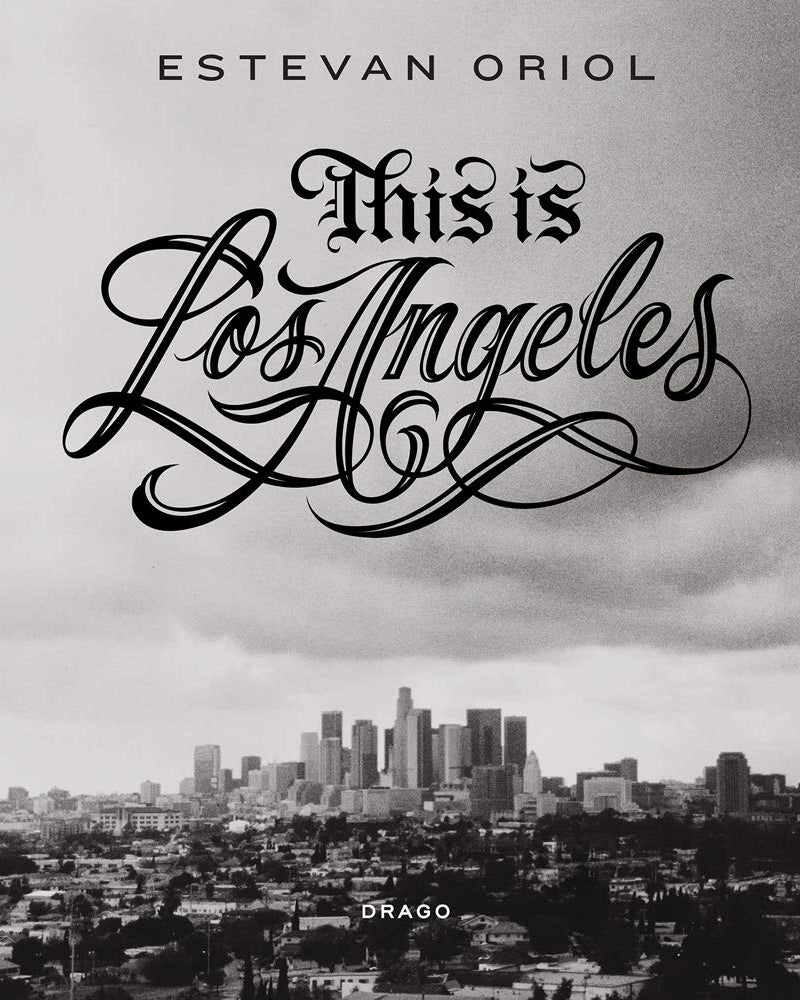
oriol
BOOK RELEASE SEPTEMBER 2009
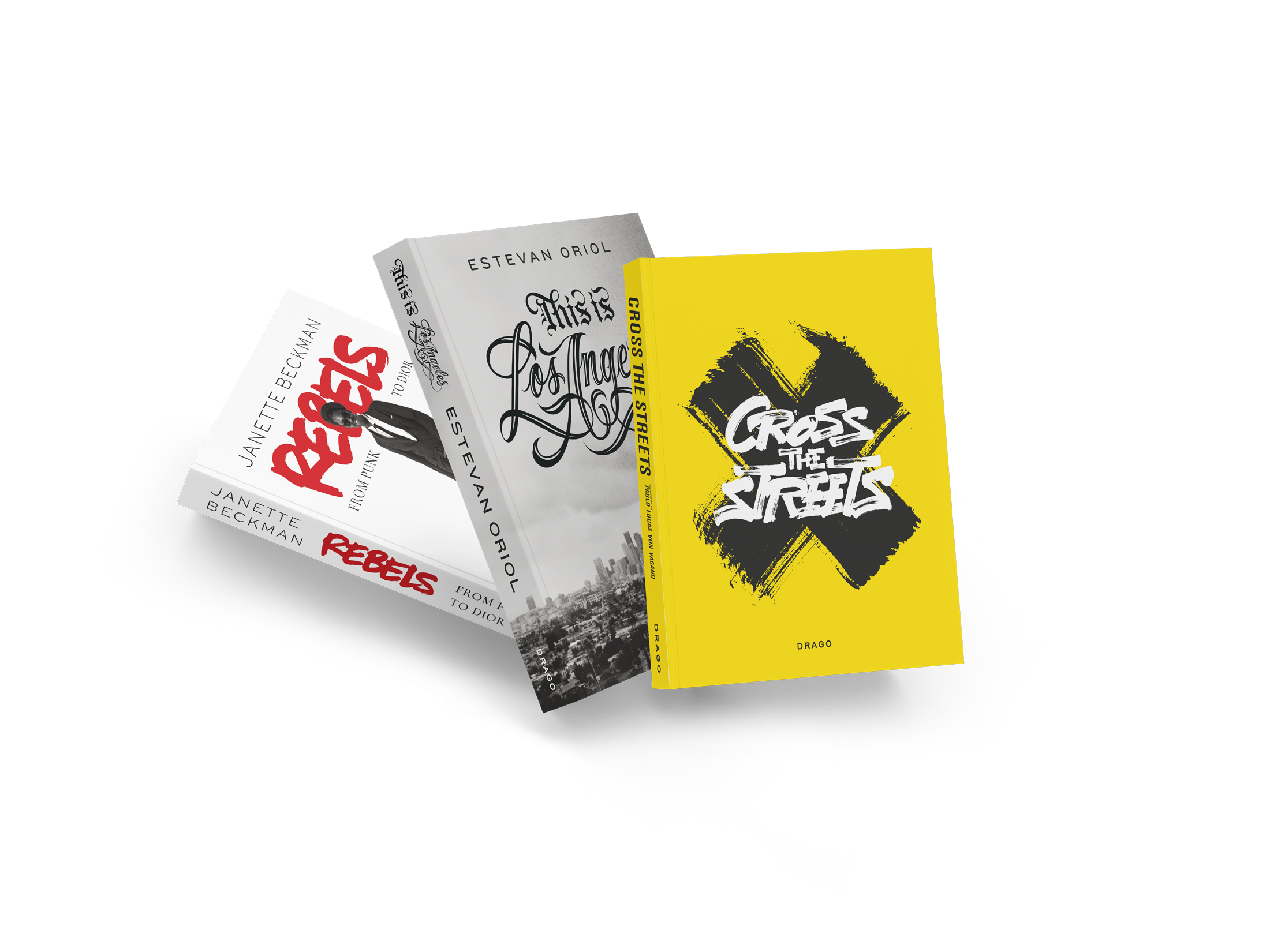
Estevan Oriol began his career in the entertainment industry in the late 1980's as a club bouncer at Los Angeles' most popular Hip Hop clubs and infamous Hollywood hangouts. It was there that Estevan first linked up with his Soul Assassin brothers from South Gate, Cypress Hill. Eager to expand his knowledge of the business, Estevan secured a job as tour manager for the rap group, House of Pain, in 1992. Estevan invoked his unique photography style to catalogue the outrageous experiences he had on tour and began taking pictures of his neighborhood homies and the low rider culture. He had a gift for capturing the raw essence of street life through his photography. Within a short time, he became one of the most sought after photographers of the Urban and Hip Hop community. His work has been featured in magazines world-wide including: COMPLEX, FHM, GQ, Flaunt, Details, Vibe, The Fader, and Rolling Stone. In 1995, after collaborating on various projects with Mr. Cartoon, a world famous Los Angeles based artist, the two joined forces in 1995 to create Joker Brand Clothing. The Joker brand has been solid as a rock. While numerous other clothing franchises have fallen by the waste side over the years, Joker has grown into a mature brand, garnering world-wide recognition and praise in the market place. A decade later, Mr. Cartoon and Estevan expanded their empire, using their unique talents to assist brands and companies in reaching the coveted Hispanic Urban market place through the establishment of SA Studios Agency, a multi-cultural multimedia design/art company. SA orchestrated a highly successful collaboration art show sponsored by Nike called Cultura, based on the line of shoes completed for Nike. SA's clients include Harley Davidson, Nike, Toyota, T-Mobile, and Rockstar Games. In 2006, Estevan teamed up with clothing powerhouse, Upperplayground, noted leader in specialty artists' inspired t-shirt lines.   Estevan's line expresses his photography on limited edition t-shirts. In its 5 season, the line and its following continues to grow at a tremendous rate. Today, in addition to being CEO of Joker Brand Clothing and his full time career as a photographer, Estevan directs music videos for groups including Eminem, Cypress Hill, D12, Linkin Park, Blink 182, Paul Wall, P.O.D., and Xzibit. He devised shooting campaigns for Nike, Rockford Fosgate, and Cadillac. He has directed new media projects for My Cadillac stories, MTV, and Apple Computer. Recently, Estevan Oriol entered the feature film industry as a director. Brian Grazer and his company, Imagine Entertainment, along with Universal Pictures, chose to partner with SA studios by requesting from Estevan a three picture deal in which he could direct three movies of his choice. The first one will be the life story of his partner, Mr. Cartoon, set for release in 2008. In late 2007 and 2008, Estevan Oriol will release three separate publishing book projects that he has been working on for the past decade: Ink, a retrospective of his last ten years with Mister Cartoon, Adidas 1979, a collaboration with Adidas originals chronicling street ball through his lens in an 80 page custom book, and East of Havana, a book about Cuban hip-hop.


CLAUDIA JAGUARIBE - QUANDO EU VI
Claudia Jaguaribe was born in Rio, but lives and works in Sao Paulo. She has exhibited her work regularly in Brazil and abroad, in museums and galleries such as the Sao Paulo Modern Art Museum, the Rio de Janeiro Modern Art Museum, the Kennedy Center (Washington), Latin Collector (New York) and Fundación Santillana (Cantabria). She has published, among other books, Atletas do Brasil (Sextante, 1995) and Aeroporto (Códex, 2002). The work of Claudia Jaguaribe is characterized by an intense image research, that uses different forms of artistic expression to address several contemporary issues. The central focus of her work revolves around questions of transition and virtuality. Claudia’s photography uses references that strongly build on these conceptual themes in the history of art. Her unique method of bringing movement to pictures and creating installations results from Claudia’s simultaneous use of different techniques and her sensibility for color and creation of new forms. Her oeuvre encompasses both the creation of abstract images, taken out of context from their original meaning, as in the series of “Série Azul”, “Amores Brutos” and “Ma Femme”, as well as more documentary-like pieces, as in “Corpo da Cidade” and “Você tem medo do que?”


THE FRENCH CONNECTION
Drago will arrive in Paris on Thursday the 2nd of July and co-host three separate events in the course of three days in association with The Lazy Dog, Colette, and The Magda Danysz Gallery. On Thursday, July 2nd Drago will host with The Lazy Dog an apertivo for the book presentation and signing of the Mai/JonOne for the 36 Chambers Series, as well as the release of a limited edition Bronze Series collection designed especially for The Lazy Dog. The 3rd of July, Colette will be hosting a cocktail party in honor of the Mai/JonOne book release, book signing from other Paris based Drago artists, and the presentation of the limited edition 36 Chambers Series Colette Collection. For their last night in Paris, on July 4th Drago will be attending The Magda Danysz Gallery inauguration of the JonOne exhibition and will be presenting Mai/JonOne and the JonOne Collection Exhibition Catalogue which has been published for the occasion. After casual art grazing and page turning Drago will continue the party with Magda Danysz and Clark Magazine at Le Baron.
The publishing house and trend bureau known as Drago is a portal into the international mindset that is fueled by the ideas and values of the current generation. The worldwide creative evolution that Drago has sparked is based on the thoughts and actions of these avant-garde thinkers. It acts as the gatekeeper of a new youth movement that Drago has coined, “S.I.C: System of Independent Culture” in contrast with the “System of 'Ufficial' Culture” (SUC). As a cultural symposium, Drago creates and presents forums for exchange by remixing pop culture and undiscovered trends. It is from these creative platforms that the lifestyle revolution which began on the street and over the internet will continue to expand and evolve. Drago represents the mainstream of minorities, where under is over and over is under.
This month Drago is proud to present JonOne in a double feature book release: The JonOne Collection from the Magda Danysz Gallery exhibition in Paris and a collaboration from JonOne and Mai Lucas, titled Mai/JonOne for the 36 Chambers Series.
Drago’s current project is the 36 Chambers Series. Within the next three years Drago is to produce thirty-six books that are dedicated to the work of thirty-six artists. The title of the project is inspired by the martial arts classic Enter the 36 Chambers of Shaolin. Like the 36 Chambers of Shaolin’s monastery, each of the thirty-six books represents a room for each artist to exhibit his or her artistic strength. The artists are confined to the use of only black, white, and a single color of their choice, yet this limited palette also serves as tool for creative liberation. The images that result are a pure impression, a powerful image without distraction, that mixes tradition and innovation. The first twelve books have already been published and together they are known as the Bronze Series, including artists like Ivory Serra, Mike Giant, Pax Paloscia, and TV Boy. The Silver Series has not been finished but, the artists to date include WK Interact, Logan Hicks, Nick Walker, and the New York and Paris based artists JonOne and Mai Lucas. JonOne grew up in Washington Heights, New York and is today a central artistic figure on the streets of Paris and around the world. In June and July alone JonOne has exhibitions at Magda Danysz in Shanghai and in Paris, the Fondation di Cartier, as well as two exhibitions in New York. The colorful paintings featuredin the Magda Danysz exhibition exude his Latin heritage and his optimism and boast of New York’s dynamic lifestyle and the magic that he felt when he painted there. His wife Mai Lucas grew up in Paris where she began her career as a photographer. Her exciting and multi-dimensional photos of urban culture capture the unique attitude of the streets. It was in New York that JonOne met Mai and since then they have been living and working between New York and Paris and influencing and inspiring each other and their work. The long awaited presentation of their life time of collaboration is finally presented to the public in Drago's newest book for the 36 Chambers Series, Mai/JonOne.


SCATTI DI GUERRA. LEE MILLER E TONY VACCARO
dallo sbarco in Normandia a Berlino
curated by Marco Delogu and Umberto Gentiloni
3 July – 30 August 2009
This is an exhibition devoted to the final phases of World War II, from the D-Day landings in Normandy to VE Day, told from two different standpoints and adopting two different approaches: on the one hand there is Lee Miller, a well-known professional photographer who grew up in Paris at the time of the Surrealists and befriended the leading thinkers of the era; on the other, there is Tony Vaccaro, a soldier with the US Army and later the official photographer for his division's newspaper, whose career as a professional photographer was just getting off the ground at the time. The exhibition of Miller's and Vaccaro's work will be structured to allow the visitor to view the photographs (about 100 pictures taken between 1944 and 1945) facing each other on two walls on the first floor of the Scuderie del Quirinale. The first room will focus on the historical context, set alongside a reconstruction of the landings on the Normandy beaches using aerial photographs taken by the RAF.
Lee Miller, a war correspondent for the British edition of Vogue magazine from 1940, became a US Army correspondent in 1944 and closely tracked the final stages of the war. She was a first-hand witness at the siege of St. Malo and she accompanied the Allied advance from the freeing of Paris to the liberation of Buchenwald and of Dachau, and right up to the destruction of Hitler's bunker. Her pictures take us by the hand from her courageous presence in the front line to her documentation of daily life in countries at war, and from the search for personalities to whom she had always been close - men such as Jean Cocteau and Pablo Picasso, whom she immortalizes in a Paris still under siege - to the atrocities in the concentration camps, providing us with a view of the war as close up as it is multifaceted. Tony Vaccaro was a soldier with the US Army, going on to become the official photographer for his division's newspaper. Using film that was closely guarded and then bravely developed under often extreme conditions, Vaccaro tells the story of years of atrocity experienced at first hand, but he also tells us the story of a continent and, more especially, of a country, Germany (where he was to stay on for a few years after the end of the conflict) as it slowly emerged from a state of war. He was later to redirect his attention to his second home, Italy, which he photographed from north to south as it made a gradual return to normality in a time of postwar reconstruction in which it was swept by an unprecedented wave of political fervor.


mailucas

MAI LUCAS AND JONONE
This is book number 16 of the cult Drago series “36 Chambers” with a collaboration by a creative couple: the urban art movement is the only avant – garde movement of today so Jonone’s  actions are an example of today’s civil society and shows, by the way, that behind every strong man often there is a strong woman.
In this book by old school graffiti writer Jonone will take the challenge of working in just black and white, with one color being inspired by the photos of his wife Maï Lucas. The challenges of doing something new and good are there for magic to happen by two artists living under the same roof.
For the last 10 years, Maï Lucas has gone out into the streets with her husband, graffiti artist Jonone: photographing the African American and Hispanic youth who live and create hip hop style and culture in all its raw vitality. According to Maï Lucas, they are the strength and inspiration of contemporary high mix culture. Her photos are a homage to them: ‘You shine, for yours and for us too. Let the street speak. Let the people shine.’ This is a celebration of another New York, Paris and Berlin. A new ‘West Side story’. Maï Lucas’s ‘Nueva York.’
Urban Art is today’s hottest trend in contemporary art, to the point that established museums such as Tate Modern (London), auction houses such as Artcurial (Paris) and Bonhams (London) are creating for the first time Street art auctions, that have included pieces by Jonone. Angelina Jolie, Brad Pitt, Madonna, Marilyn Manson among collectors. The mainstream of the minorities of the MTV generation is dominant in the contemporary imagery. Youth culture is The movement of today’s world.

 
Jonone
 
JONONE
John "JonOne" Perello grew up in Harlem where graffiti and tags were seen in everyday life. Nowadays, JonOne has structured his work from the streets of New York to the "limitations" of canvas (some extremely large) and he now fancy more brushstrokes than air sprays. However, even though we can see some inspirati on s coming from Jacks on Pollock, Julian Schnabel or Jean Dubuffet, the street is still very much there. His extremely colorful paintings remind us of the frenzy of large cities, of their bright lights and social codes. JonOne's work is an allegory of the Urban Jungle in which most of us live, but always seen from the optimist and colorful side of life. 


giant

MIKE GIANT - COUP D'ETAT
Mike Giant, Street wizard and urban Mau Mau, is one of the superstars of the urban art movement which is the leading imaginary of today’s global culture. Mike Giant has achieved fame as a graffiti artist, illustrator and tattooist. Black ink is Giant's specialty and whether his medium is concrete, paper or skin, his signature style - inspired of Mexican folk art and Japanese illustration - is unmistakable. Mike Giant has worked in media covering, graffiti, design, fine art, photography and tattooing, making him one of the most celebrated and versatile artists of his generation. In a coming together of street art, tattoo, folk art, Buddhism, pop icons and ecology, Mike Giant mixes symbols of New Mexico’s cholo culture with appetizing pin-ups. 
After the amazing success of  Mike Giant’s book “Muerte” of the Drago 36 Chambers series here comes the new bestseller of one of the most famous tattoo artist that turned into fine art, graffiti and pop culture. His style in this book “COUP D’ÉTAT” shows a new side, combining his new artworks with his new passion  - photography. The urban art movement is the only avant-garde movement of today’s world that reflects the leading global pop imaginary that connects  street and internet.  Mike Giant created a global network that reflects the taste of the street with the finesse of fine art.


dalek

DALEK - HIS MAJESTY FALLACY
Dalek, aka James Marshall, is one of the most exciting artists from the burgeoning Brooklyn art scene. While he has received a BFA of the Art Institute of Chicago, he is especially inspired by street art, graffiti, and televisual culture. His work has been exhibitioned in London's Apart Gallery, in New York, and in the Museum of Contemporary Art in Washington. Furthermore, he worked with Takashi Murakami. He then successfully dedicated to his own career and has shown all over the world, from Los Angeles to Paris or Tokyo. Dalek has a heritage of street art and was assistant to the Japanese artist Murakami, and from those experiences he has kept two elements: an incredible force and an unequalled precision. As he himself says laconically “it’s there and in full force...”. By now, the Space Monkeys Dalek produced in his childhood have lived their share of history. Inspired by the cartoon series Dr. Who, the Daleks were born of an imagination developed by the artist very young. And if they seemed to some like “merciless assassins of humanity”, Dalek plays on their somewhat misanthropic instincts. But underneath it all, the Space Monkeys are “more mischievous than dangerous”. The book is published in occasion of his exhibition at the Magda Danysz Gallery in Paris from April 25th to May 23rd 2009 together with his friend Mike Giant. 


 tillim

GUY TILLIM
Guy Tillim (Born in 1962) is a South African photographer.
Guy Tillim is one of South Africa's foremost contemporary photographers. Learning his trade as photojournalist nearly two decades ago, Tillim's oeuvre has proven to be far more than that of orthodox reportage. His photographs have become increasingly recontextualised as art object within the space of the artbook and gallery. Guy Tillim is a South African photographer known for his black and white and later digital work, mainly of third world Africa and often of war- and trouble-stricken areas. "Tillim was born in Johannesburg in 1962. He started photographing professionally in 1986 and joined Afrapix, a collective of South African photographers with whom he worked closely until 1990. His work as a freelance photographer in South Africa for the local and foreign media included positions with Reuters between 1986 and 1988, and with Agence France Presse in 1993 and 1994. Tillim has received many awards for his work including the Prix SCAM (Societe Civile des Auteurs Multimedia) Roger Pic in 2002, the Higashikawa Overseas Photographer Award (Japan) in 2003, and the 2004 DaimlerChrysler Award for South African photography. In 2005 he won the Leica Oskar Barnack Award for his Jo'burg series. The prize was awarded at the Rencontres Internationales de la Photographie in Arles, France, in July 2005. The Jo'burg series has been published in book form by Filigranes Editions and STE. His Petros Village series was exhibited at the Museo di Roma in Trastevere, Rome, as part of the Rome Photo Festival 2006. Tillim has been awarded the first Robert Gardner Fellowship in Photography by the Peabody Museum at Harvard University. In recent months, his work has been exhibited at the São Paulo Bienal; on SLUM: Art and life in the here and now of the civil age at the Neue Galerie in Graz; on Photography, Video, Mixed Media III at the DaimlerChrysler Gallery in Berlin; and on Africa Remix, which travels to the Johannesburg Art Gallery in 2007. His work is included in Vitamin Ph (Phaidon, 2006). He currently has solo exhibitions at Extraspazio, Rome, until 21 April, and the Goodman Gallery, Johannesburg, until 10 February 2007. His work is also included on FotoGrafia - Rome's International Festival in the group exhibition Non Tutte Le Strade Portano a Roma, Ex Gil (16 March - 26 April)."


logan

LOGAN HICKS - ARRIVALS AND DEPARTURES
The book represents the past 5 years of his work, travel, thoughts, and ideas.
The book is an insight as to everything that has made up his life for the past 5 years.
Within his work, he tries to draw a parallel between the cold, harsh city and warm, vibrant organism. It is alive; a breathing creature where the people
do not exist within it, but rather along side of it. It is this symbiotic relationship with the city that fuels his work. Each person is an active cell that circulates the nutrients through the city veins. Logan Hicks thinks that sometimes people do not realize how the city affects them. Each building blocks a path. Each wall blocks a view. Each door hides an opening.
The city effectively blocks out the outside world and creates its own reality. The city is a labyrinth of limited possibilities. Within he work, he tries to explore those microcosms that only exist in the city. The niches of city life that epitomize the urban existence. The confined spaces on subways, honeycomb living structures, the ebb and flow of people washing over
the sidewalks like a rogue wave on the beach. These are the things that he notices as he walks around. He has a love-hate relationship with the city.
BUY THIS BOOK


walker

NICK WALKER
Nick Walker is one of the most famous stencil artists. A series of stencil images revealing a progression of his work over the last couple of years. Some of the pages will show some of the endeavors of the vandal character and the means he uses to spread his message. His intention is to show movement within the pages as if parts of the book were a ‘flip book’ displaying the act of vandalism. There will also be a collection of new stencil works in the pages which are either currently in the making or have yet to be produced.
BUY THIS BOOK


wk

WK INTERACT - NEW YORK STREETLIFE 2.5
WK Interact is at the cutting edge of today’s pop revolution that appeals to contemporary art, youth culture, graphic design.
WK Interact describes his work: “ I was interested in flashes of motion, to be viewed in motion. WK Interact has a very unique signature art on the walls of streets and institutions “now I bring the street indoors via the media I choose in order to charge the subject with enough energy to generate the same effect it would have had outdoors”.


fotografia

FESTIVAL INTERNAZIONALE DELLA FOTOGRAFIA DI ROMA 2009
From April 4th to May 25th FotoGrafia-Rome’s International Festival seventh edition, sponsored by the Municipality of Rome and produced by Zoneattive, with artistic direction by Marco Delogu. 
The theme chosen for this edition is “Seeing normality. Photography portrays daily life” which – according to Marco Delogu- is addressed at showing “how for all of us photography is the best means for describing everyday life; a thought that also originates in a desire to portray normality in contrast with extraordinary events”.
A particularly concentrated Festival with a powerful nucleus at the Palazzo delle Esposizioni, recently reopened to the public, which becomes the heart of FotoGrafia and will host the most important exhibitions , all new productions presented for the first time, as well as a rich programme filled with events, screenings, readings of portfolios, presentations and encounters with the most important representatives of the Italian and international world of art. Another important new entry is the Macello IV at the Mattatoio, managed by Zoneattive, a location already open to experimentation and new forms of expression, whereas the presence of the Museo di Roma in Trastevere confirms the location as a space dedicated to photo-journalism and the National Gallery of Modern Art.
At the Palazzo delle Esposizioni there will be works by a group of young photographers: Paolo Woods with The Chinese Far West  is a journey/reportage following industrial neo-colonialism’s great hunt for the eastern tiger in newly conquered African lands;  Leonie Purchas achieves the completion of his work investigating her own family and  Lucia Nimcova, the Slovakian photographer winner of the FotoGrafia Baume & Mercier International Award, presents the work she created precisely thanks to this prize where she investigates and describes the utopian communist system through the history of her hometown, Humenne. We will also see the most recent production by Gabriele Basilico, this year the leading player for the Commissione Roma FotoGrafia alcatel Lucent with work on the River. Basilico’s work is linked to the collective exhibition on “Rome” created by numerous photographers, among them Graciela Iturbide, Tim Davis, David Farrell, Pieter Hugo, Raffaela Mariniello, Milton Gendel, Miguel Rio Branco, Paolo Ventura, Shi Gu Roi, Claudia Jaguribe. 
Burma’s political tragedy is presented at the Museo di Roma in Trastevere by Orith Drori, with BURMA(Between Us Remember Me Always). Daniele Dainelli instead concentrates on his Tokyo, with Tokyo in Eclipse. On the occasion of the 40th anniversary of the creation of the St. Egidio community, the Festival devotes a great deal of room to the community’s activities with reportages by Riccardo Venturi, PRIMERO DIOS !  and Giuliano Matteucci, Abitare Conakry  created in El Salvador and in Conakry Guinea.
 At Nattional gallery of Modern Art an important exhibition about photos of David Perlov (with also projections of his more important film at Palazzo delle Esposizioni) and Rossella Bellusci with Passers by
. At Macello IV at the Mattatoio we discover a cross-section of emerging trends with a big event on April 5th to opening FotoGrafia. For this party will be presented many suggestion uploaded on www.fotografiafestival.it .
 At IILA Gallery the exhibition Día a día. IILA-FotoGrafiaAward with better works presented for the award.
 The project on the Latium territory sponsored by the Latium Region will begin this year with a workshop held by Olivo Barbieri and David Farrell with 12 young photographer will became an exhibition The journey along the Via Francigena at GIL. 
Patrizio Esposito presents, in Project Room Villa Glori, the photographic work of the leading players in the battle for the Sharawi people’s self-determination, who this photographer has closely followed and supported since 1991.
 The Festival’s Circuit has an increasingly rich programme, which thanks to the involvement of art galleries, cultural institutes, Academies and other locations (clubs, schools, bars, bookshops)
. From April 3rd, three opening days with events like Roman Lessons” (Martin Parr, Giovanna Calvenzi, Tim Davis), the first FotoGrafia Book Award the presentation of the project for the second edition of the FotoGrafia Baume & Mercier International Award and much more.


barrera

GIORGIO BARRERA
Giorgio Barrera (Cagliari 1969). He sudied at Studio Marangoni Foundation in Florence where,in 1997, he completed the Three Year Course Diploma in Photography. After a period ofcollaboretion with Joel Meyerowitz, he concentrated on sociology and focused his researches on daily life domestic rituals, on steet photography and lendscape photography. In his images the space and the enviroment, be them pubblic or private spaces, are like a stage, like ascenographic containers. He has recently realized some shot movies exprerimenting newcinematographic languages. Barrera lives and works in Milan.